International Project Cooperation

Enhancing Stakeholder Awareness and Resources for Hate Crime Victim Support (EStAR)

Duration: 01.01.2020 – 30.04.2022

Implementing Organizations:

Project Countries: 27 EU Member States and Albania, Armenia, Bosnia and Herzegovina, Georgia, Iceland, Moldova, Montenegro, North Macedonia, Norway, Serbia, Switzerland, Turkey, Ukraine and the United Kingdom.

By implementing the EStAR project, we reaffirm our commitment to providing support to hate crime victims, advocating for a victim-centered approach and improving services to those who suffered a hate motivated discrimination, abuse and violence.

Through the project, and together with our partner, ODIHR, we will set up the first ever Expert Network of victim support practitioners who work to ensure that hate crime victims receive adequate protection, specialized services and access to justice.

We will build on experts’ knowledge and experience to continue promoting and developing good practices in hate crime victim support and encourage cooperation between state actors and Civil Society Organizations. We will do so by engaging our Network partners in producing analytical papers on needs of hate crime victims, baseline studies on structural frameworks for individual needs assessment and referrals, compendiums on cooperation models between government agencies and civil society actors, as well as providing an assessment of availability and quality of specialized services. We will offer innovative ways to identify gaps in national hate crime victim support and present options to address shortcomings.

The project is implemented at a challenging time when the entire world is dealing with the outbreak of the COVID-19 pandemic. We will look for ways to deploy our resources using positive potential of digital tools to ensure that the project is carried out in an inclusive and collaborative manner, with all relevant stakeholders having access to a platform to exchange information and jointly work on ways to improve support for hate crime victims.

We are painfully aware of the rise in hate crimes since the beginning of the coronavirus pandemic, and commit ourselves to intensify our efforts to ensure protection and support to victims of hate crimes, strengthen cooperation between countries and among service providers to ensure that victims have access to justice, necessary psychological, social and legal support.
Further Information:

EStAR publications

Analytical Paper: Understanding the Needs of Hate Crime Victims

This publication aims to provide information and foster understanding of the specific needs of hate crime victims. It addresses the needs common to all or most victims of hate crime, both as a category of victims and as individuals. This publication is primarily addressed at law enforcement and criminal justice officials, and hate crime specialists and victim support practitioners from government and civil society alike. The diversity and breadth of the needs of hate crime victims mean that many other professionals encounter them on regular occasions. Lawyers, psychologists, medical or social workers could study this publication to better care for their clients.

Download: Analytical Paper: Understanding the Needs of Hate Crime Victims
Download: Analyse: Die Bedürfnisse von Betroffenen von Hassverbrechen verstehen (Deutsche Edition)
Download: Zrozumienie potrzeb ofiar przestępstw z nienawiści (Polish edition)

Baseline Report: The State of Support Structures and Specialist Services for Hate Crime Victims

The report presents the results of a mapping exercise to identify the hate crime victim support structures and services provided in the project states, including selected good practices. The report also identifies gaps in support for hate crime victims in those states and gives solutions to adressing selected problems in hate crime victim support.

Download: The State of Support Structures and Specialist Services for Hate Crime Victims Baseline Report

Guide: Model Quality Standards for Hate Crime Victim Support

Hate crime victimization can be profoundly traumatic. Victim support is vital to healing the trauma of crime by helping victims to manage the harms inflicted and deal with the aftermath if seeking justice. This guide provides benchmarks used to specify the quality of services required to meet states’ obligations to victims of hate crime. Its quality standards can also be used as guidelines for the development of new services, and as criteria to assess the quality of existing services. Quality standards play a crucial role in developing and strengthening specialized hate crime victim support, as high professional standards for the conduct, expertise and organization of services are key to meeting victims’ needs.

It also includes Checklist of Model Quality Standards for specialist hate crime victim support services for ease of use.

Download: Guide: Model Quality Standards for Hate Crime Victim Support
Download: Checklist of Model Quality Standards for specialist hate crime victim support services

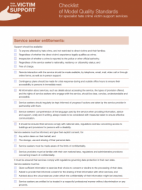
Checklist of Model Quality Standards for specialist hate crime victim support services

Quality standards play a crucial role in developing and strengthening specialized hate crime victim support, as high professional standards for the conduct, expertise and organization of services are key to meeting victims’ needs. This Checklist of Model Quality Standards for Specialist Hate Crime Victim Support Services makes it easy to see in which areas an organization has already achieved the quality criteria and where there is still potential for development.

Download: Checklist of Model Quality Standards for specialist hate crime victim support services

Guide: Model Guidance on Individual Needs Assessments of Hate Crime Victims

This model guidance provides information on what an Individual Needs Assessment (INA) of hate crime victims entails and how to set up a system in which INAs are both effective in achieving their goals, and sensitive and respectful to the specific needs of the victims. It serves as a tool to guide relevant state institutions, victim support services and civil society organizations working in the field of hate crime victim support in designing, adapting and implementing an effective INA process.

Download: Guide: Model Guidance on Individual Needs Assessments of Hate Crime Victims

Compendium: Practices on Structural Frameworks for Individual Needs Assessment (INA) of Hate Crime Victims and Referrals

The objective of this compendium is to illustrate the main features of an effective individual needs assessment (INA) of hate crime victims, using existing practices and initiatives that have been developed in relation to different aspects of INAs in countries coverd by ODIHR’s EStAR project. The publication shows that a more robust approach to developing an INA as an essential post-victimization tool is necessary, and that greater recognition is required of the importance and utility of this tool in securing victims’ rights and enabling their access to relevant services to address needs.

Download: Compendium: Practices on Structural Frameworks for Individual Needs Assessment (INA) of Hate Crime Victims and Referrals

Diagnostic Tool for Assessing National Hate Crime Victim Support Systems

The Diagnostic Tool is a practical tool for assessing shortcomings and strengths in national hate crime victim support structures and services. The primary purpose of the Tool is to enable hate crime victim support practitioners, officials, activists and policymakers to identify areas in their national systems that require improvement to enhance protection and support for victims of hate crime.

Download: Diagnostic Tool for Assessing National Hate Crime Victim Support Systems

Policy Brief: Structural Arrangements for Hate Crime Victim Support

This policy brief provides an overview of the concrete steps and measures governments can take to establish or strengthen structural arrangements to make a comprehensive and needs-based hate crime victim support system a reality.

Download: Policy Brief: Structural Arrangements for Hate Crime Victim Support


Policy Brief: Specialist Support for Hate Crime Victims

Hate crime victims require access to specialist support services. These services should be victim-centred, needs-based and diversity-sensitive. They should include practical help, emotional and psychosocial support, advice relating to legal and financial issues and community engagement. Such specialist support services for hate crime victims should be free of charge, confidential and form an integral part of a comprehensive hate crime response.
This policy brief draws attention to the worrying situation in many participating States of the Organization for Security and Co-operation in Europe (OSCE), where current responses to hate crime victims’ needs fall short of agreed international commitments and obligations. It also highlights the need to establish or expand specialist support services that are tailored to victims and address the harmful impacts of hate crimes at the individual, community and societal levels

Download: Policy Brief Specialist Support for Hate Crime Victims


Compendium: Practices of Civil Society and Government Collaboration for Effective Hate Crime Victim Support

The compendium illustrates where co-operation between state and civil society actors is essential for robust hate crime victim protection and support systems and processes. It highlights existing practices of collaboration which are key to ensure hate crime victims are protected, enjoy full access to justice, and receive tailored specialist support. It has been created as part of the Enhancing Stakeholder Awareness and Resources for Hate Crime Victim Support Project (EStAR).

Download: Compendium: Practices of Civil Society and Government Collaboration for Effective Hate Crime Victim Support


Training Course: Quality Specialist Support Services for Hate Crime Victims

Hate crime is a manifestation of discrimination and intolerance that has a profound impact on victims, communities and societies. Victims of hate crimes require specialist services to support them in their recovery from these crimes, to enable them to effectively participate in the criminal justice process and to regain a sense of agency. This support includes practical help, emotional and psychosocial support, and advice relating to legal and financial issues, as well as community work. Such specialist support is tailored specifically to each individual who is a victim of or a witness to a hate crime, has experienced a hate incident or is affected by a hate crime committed against someone else.

Download: Training Course: Quality Specialist Support Services for Hate Crime Victims


Policy Brief: Hate Crime Victim Support

This policy brief condenses the knowledge and key findings of the Enhancing Stakeholder Awareness and Resources for Hate Crime Victim Support (EStAR) project implemented by the OSCE Office for Democratic Institutions and Human Rights (ODIHR), in partnership with the Association of Counseling Centers for Victims of Right-Wing, Racist, and Antisemitic Violence in Germany (VBRG). It distils the guidance contained in the project’s publications related to the establishment and strengthening of hate crime victim support into a single accessible set of policy recommendations.

Download: Policy Brief: Hate Crime Victim Support


Enhancing Stakeholder Awareness and Resources for Hate Crime Victim Support (EStAR) is implemented by the OSCE Office for Democratic Institutions and Human Rights (ODIHR), in partnership with the Association of Counseling Centers for Victims of Right-wing, Racist and Antisemitic Violence in Germany (VBRG). It is funded by the European Union’s Rights, Equality and Citizenship Programme (2014-2020) and the Federal Government of Germany.